

Egyptian Limestone vs Marble Which Stone Is Best for Your Project?

Introduction
Choosing between limestone and marble affects more than the visual direction of a project. It influences installation methods, maintenance planning, finish selection, procurement cost, and long-term performance.
For architects, contractors, developers, importers, and distributors, the decision often comes down to the project’s use case. A luxury hotel lobby may call for polished Egyptian marble. A warm residential villa, exterior facade, or landscaped pool area may perform better with Egyptian limestone in a honed, brushed, or sandblasted finish.
This guide compares Egyptian Limestone vs Marble from a practical specification and sourcing point of view, with examples from Marmo World’s natural stone collections.

Table of Contents
What Defines Egyptian Limestone and Egyptian Marble?
Egypt produces a wide range of natural stones used in international residential, commercial, hospitality, and landscaping projects. The two most specified categories are limestone and marble.
Egyptian limestone is typically valued for its soft beige, cream, and warm neutral colors. It works well in projects that need a calm architectural surface, especially for facades, exterior flooring, wall cladding, and landscape areas. Marmo World offers options such as Samaha Beige Egyptian Limestone, Galala Beige Egyptian Limestone, and Sunny Menia Egyptian Limestone.
Egyptian marble usually has a denser visual character, with more movement, veining, and polish potential. It suits interiors, hotel spaces, reception areas, staircases, feature walls, and premium flooring. Popular Marmo World selections include Silvia Menia Marble, Silvia Light Marble, and Sahaba Marble.
For buyers comparing both categories, Marmo World’s Egyptian Limestone Collection and Egyptian Marble Collection provide a strong starting point.
Egyptian Limestone vs Marble Comparison Table
Factor | Egyptian Limestone | Egyptian Marble |
Visual style | Soft, warm, subtle, architectural | Elegant, polished, veined, more decorative |
Common colors | Beige, cream, light gold, warm gray | Beige, gray, cream, brown, mixed veining |
Best uses | Facades, landscaping, exterior paving, wall cladding, villas | Interior flooring, hotel lobbies, stairs, feature walls, bathrooms |
Finish options | Honed, brushed, tumbled, sandblasted, acid-washed | Polished, honed, brushed, sandblasted, tumbled |
Maintenance | Needs sealing and proper cleaning, especially outdoors | Needs sealing and careful cleaning, especially polished surfaces |
Cost considerations | Often practical for large-volume projects | Usually selected for higher visual impact and premium interior areas |
Design impression | Natural, calm, understated | Refined, formal, luxurious |
Procurement fit | Strong choice for volume cladding and paving | Strong choice for statement interiors and higher-end finishes |
Appearance and Design Character
Egyptian limestone creates a warm architectural base
Limestone has a quiet visual language. It does not compete with furniture, lighting, landscape design, or facade geometry. This makes it a strong material for large areas where consistency matters.
Common design uses include:
Limestone flooring in villas, resorts, and outdoor terraces
Limestone cladding for facades, boundary walls, and landscape features
Neutral wall panels in hospitality and residential interiors
Pool surrounds and garden walkways with textured finishes
Stones such as Galala Beige Egyptian Limestone and Sunny Menia Egyptian Limestone are often selected when designers want a natural beige tone that feels timeless rather than decorative.
Egyptian marble adds movement and visual depth
Marble offers a more refined surface. It can accept a high polish, which helps create reflective interiors and formal spaces. The veining and tonal movement vary by selection, so slab approval and sample review matter during procurement.
Egyptian marble works especially well in:
Marble flooring for hotel lobbies, corridors, and reception areas
Marble cladding for feature walls and elevator surrounds
Staircases, risers, and interior wall panels
Bathrooms, vanity tops, and decorative interior details
Options such as Silvia Menia Marble, Silvia Light Marble, and Sahaba Marble can support different design moods, from soft and light to richer and more expressive.

Durability and Maintenance
Both limestone and marble are natural stones, so no two blocks or slabs are identical. Good performance starts with correct material selection, finish choice, installation, sealing, and cleaning.
Limestone durability considerations
Egyptian limestone performs well when the finish matches the intended use. For exterior flooring, textured finishes can improve slip resistance compared with polished surfaces. For facades, honed or brushed limestone can create a natural look while handling sun exposure better than highly reflective materials.
Key maintenance points include:
Use a suitable sealer based on location and exposure.
Avoid acidic cleaners.
Specify the right thickness and finish for traffic levels.
Review samples under project lighting before approval.
Marble durability considerations
Egyptian marble is often chosen for interiors where elegance and finish quality matter. Polished marble can deliver a premium look, but it requires careful cleaning and maintenance. Honed marble can reduce visible wear in some high-traffic spaces and create a softer appearance.
For marble flooring and marble cladding, project teams should confirm:
Finish type and slip suitability
Expected foot traffic
Cleaning and sealing schedule
Shade and vein variation tolerance
Installation method and substrate condition
Best Applications by Project Type
Residential projects
For private villas and residential developments, limestone gives a relaxed and natural result. It works well for exterior walls, garden paths, terraces, and soft interior floors.
Marble suits more formal areas such as entrance halls, staircases, bathrooms, and feature walls. A balanced residential specification may use limestone outdoors and marble indoors.
Commercial developments
Commercial projects often need materials that balance appearance, volume availability, maintenance, and budget. Limestone cladding can cover large facade areas with a consistent architectural tone. Marble can highlight lobbies, reception counters, elevator areas, and executive floors.
For mixed-use developments, this combination helps control cost while protecting visual impact in key arrival spaces.
Hospitality projects
Hotels and resorts often use both materials in different zones. Limestone supports outdoor paths, courtyards, pool decks, and resort-style facades. Marble creates luxury in lobbies, suites, spa interiors, and restaurants.
For hospitality procurement, buyers should review finish samples, mockups, and packing standards before shipment. This helps reduce site surprises and keeps installation aligned with the design intent.
Landscaping projects
Limestone often fits landscaping better than polished marble because it can provide a softer, more natural surface. Brushed, tumbled, or sandblasted Egyptian limestone works well for walkways, garden walls, steps, terraces, and pool surroundings.
For projects that need a different texture or warmer character, Egyptian Travertine can also be considered alongside limestone.

Cost, Finishes, and Sourcing Considerations
A reliable natural stone comparison should look beyond the material price per square meter. Total cost includes block selection, slab or tile processing, finish, thickness, edge work, packing, freight, installation, sealing, and expected maintenance.
When limestone may be the better value
Egyptian limestone often works well for large-scale projects because it offers a high-end natural look without the visual complexity of marble. It can be a smart choice for:
Large facade areas
Exterior wall cladding
Landscape paving
Resort walkways
Residential outdoor spaces
Projects needing warm neutral tones at scale
When marble may justify the higher specification
Egyptian marble can be the stronger choice when a project requires elegance, polish, and a more decorative finish. It is often selected for:
Hotel lobbies
Luxury apartments
Formal staircases
Interior wall features
Premium bathrooms
Commercial reception areas
Finish selection changes performance
Finish choice can affect appearance, safety, cleaning, and suitability. Polished marble creates shine and depth, but it is usually better for interiors. Honed finishes produce a softer matte look. Brushed, tumbled, and sandblasted finishes can support exterior and landscape use when specified correctly.
As an Egyptian stone supplier, Marmo World works with project requirements such as sizes, finishes, thicknesses, packaging, and export preparation. For international buyers, early coordination helps align design intent with production feasibility.
How to Choose the Right Material
Choose Egyptian limestone when the project needs:
Warm beige or cream tones
Large-format exterior cladding
Natural landscape paving
A calm architectural background
Good value for large-volume applications
Choose Egyptian marble when the project needs:
A polished or refined interior finish
More veining and visual movement
Hotel, residential, or commercial luxury
Feature walls, stairs, or premium floors
A stronger decorative statement
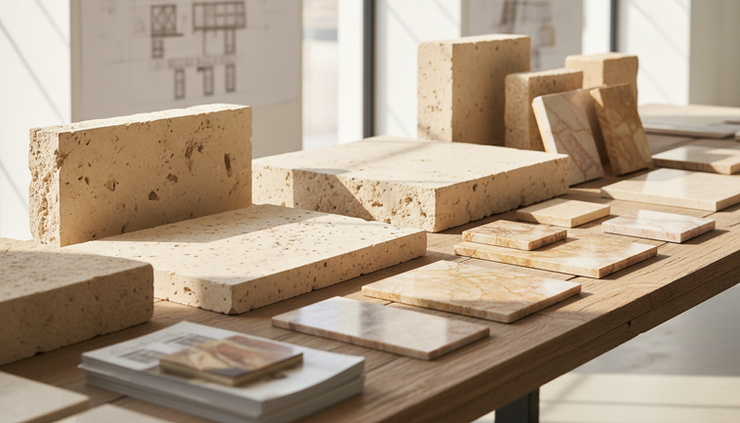
If the project covers several zones, specify both. Limestone can handle facades, terraces, and landscape areas, while marble can define lobbies, suites, and interior focal points.
FAQs
Is Egyptian limestone better than Egyptian marble for exterior use?
Egyptian limestone is often the better choice for exterior paving, landscaping, and facade cladding, especially with honed, brushed, tumbled, or sandblasted finishes. Marble can be used in some exterior applications, but the finish and exposure conditions need careful review.
Which is better for flooring, limestone or marble?
For limestone flooring, choose it when the design needs a warm, natural, and understated surface. For marble flooring, choose it when the project needs a more formal interior with polish, veining, and a premium appearance.
Does Egyptian marble require more maintenance than limestone?
Polished marble usually needs more careful cleaning because acidic products and abrasive methods can affect the surface. Limestone also needs proper sealing and neutral cleaners, especially in exterior or wet zones.
Which stone is more cost-effective for large projects?
Egyptian limestone is often more practical for large facade, cladding, and landscape projects. Egyptian marble may carry a higher specification value in areas where visual impact matters most, such as lobbies, suites, and feature walls.
Can limestone and marble be used together in one project?
Yes. Many residential, commercial, and hospitality projects use limestone outdoors or on large architectural surfaces, then use marble indoors for high-impact areas.
How should importers choose an Egyptian stone supplier?
Importers should review material consistency, finish options, production capacity, packing quality, export experience, and communication during sampling and approval. A clear specification reduces risk before production starts.
Choosing the Right Stone with Marmo World
The best choice is not simply limestone or marble. It is the material that fits the project’s design, traffic, location, finish, maintenance plan, and budget.
Marmo World manufactures and exports Egyptian natural stone for international projects, including limestone, marble, and travertine. Whether the specification calls for Egyptian Limestone Collection, Egyptian Marble Collection, or Egyptian Travertine, the selection should begin with project conditions and approved samples.
For technical guidance, samples, finishes, and export inquiries, contact Marmo World to discuss your project requirements.
Comments